

What Local Ag Producers Should Know About Gearbox Maintenance Before Planting Season
September 24, 2025 4:04 pm Leave your thoughtsPreparing for planting season is one of the most critical times of the year for local agricultural producers. Farm equipment efficiency, reliability, and longevity directly impact productivity and profit margins. One often-overlooked component that plays a vital role in ensuring seamless operations is the gearbox. Proper gearbox maintenance is essential for keeping equipment running smoothly and avoiding costly delays during the planting season. By understanding how to maintain agricultural gearboxes, farmers can prevent unexpected downtime, improve machine performance, and reduce long-term repair expenses.
The Role of Agricultural Gearboxes in Farm Operations
Agricultural gearboxes are essential components found in many types of farm machinery, including tractors, planters, spreaders, and irrigation systems. These gearboxes transmit power from the engine to various equipment parts, enabling them to function effectively. They manage torque and rotational speed, ensuring equipment operates efficiently under heavy workloads and challenging field conditions.
When agricultural gearboxes are not properly maintained, they are prone to wear and tear, which can lead to operational breakdowns. The planting season is particularly demanding on farm machinery because of extended operating hours and increased workloads. A faulty gearbox at this time can halt operations entirely, resulting in missed planting windows and reduced yields. For this reason, proactive maintenance is more than just good practice—it’s an investment in productivity and profitability.
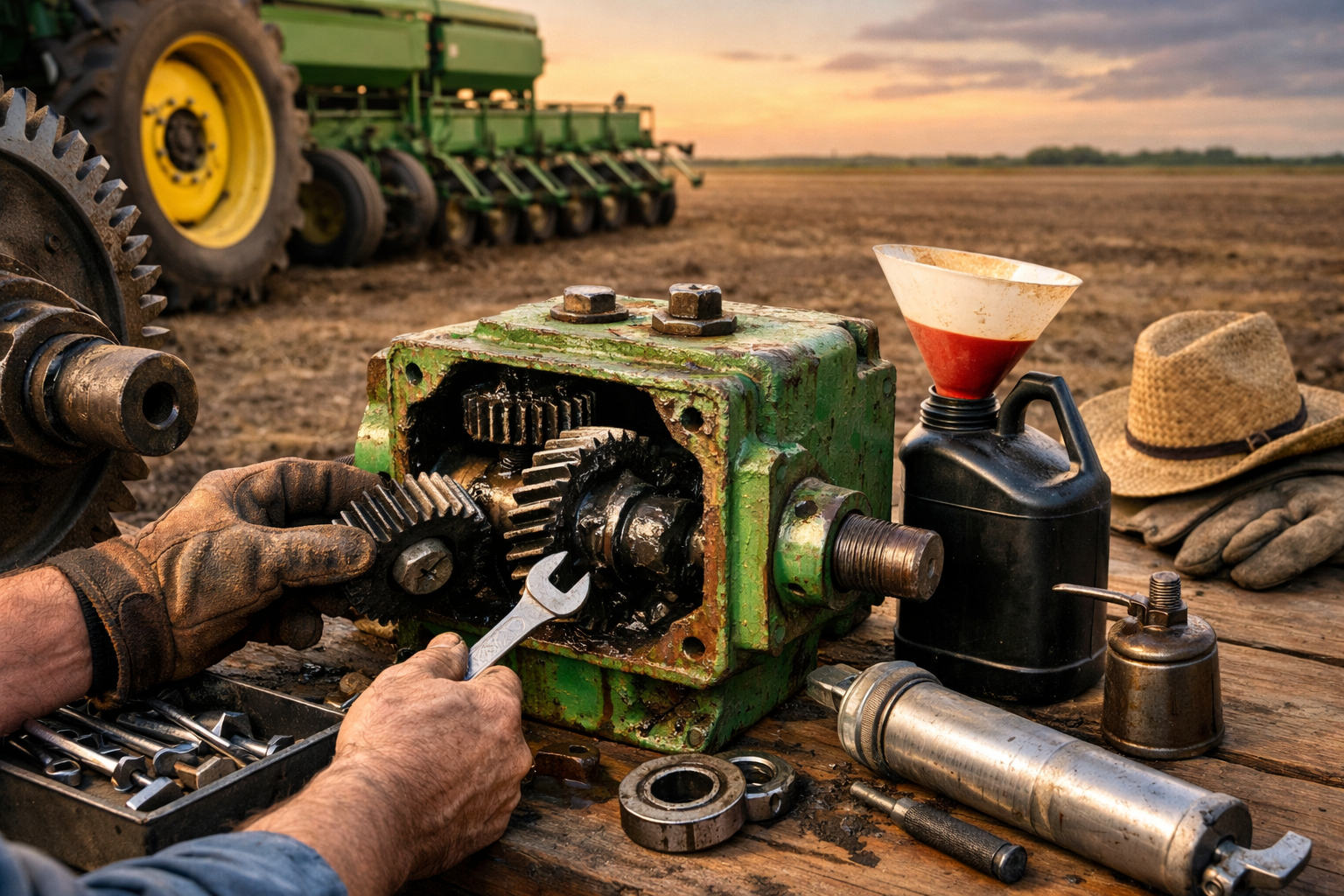
Regular gearbox maintenance involves checking components for signs of wear, replacing lubricants, and ensuring seals and bearings are in proper working condition. By dedicating time to farm equipment maintenance tips focused on gearboxes, producers can keep their machinery running reliably when it matters most.
Key Gearbox Maintenance Practices Before Planting Season
Farmers should establish a structured approach to gearbox maintenance to avoid equipment failures during the critical planting period. The process begins with a thorough inspection of all machinery and continues with proper care routines tailored to the specific equipment being used.
One of the most crucial steps in gearbox maintenance is inspecting for leaks. Over time, seals can deteriorate, allowing lubricants to escape and leaving internal components exposed to friction and heat damage. Regularly checking for oil leaks and replacing damaged seals is a simple yet effective way to prevent gearbox failure.
Lubrication is equally important for maintaining smooth operation. Agricultural gearboxes rely on high-quality lubricants to reduce friction and prevent overheating. Before planting season, producers should drain old oil, remove contaminants, and refill gearboxes with fresh lubricant recommended by the manufacturer. Neglecting lubrication can cause excessive wear, leading to expensive repairs or complete gearbox replacement.
In addition, producers should check for loose or worn gears, bearings, and shafts. Unusual noises, vibrations, or grinding sounds during operation are often early indicators of internal damage. Addressing these issues promptly can prevent further deterioration and costly downtime.
Farm equipment maintenance tips also recommend keeping gearboxes clean and free of dirt, dust, and crop residue. Debris accumulation can lead to overheating and premature wear. By routinely cleaning external surfaces and ensuring ventilation pathways remain unobstructed, producers can extend the life of their agricultural gearboxes.
How to Prevent Gearbox Failure During High-Demand Seasons
Planting season places maximum stress on farm equipment, and gearbox failure at this stage can derail operations. Preventive maintenance is the best strategy for avoiding unexpected problems. The key lies in adopting a proactive approach rather than reacting to equipment breakdowns when it’s too late.
Preventive practices include scheduling regular inspections well before planting begins, testing equipment under light loads, and monitoring performance closely. Using predictive maintenance tools, such as vibration analysis and thermal imaging, allows producers to detect early warning signs of gearbox damage before they become critical.
Another crucial aspect is maintaining proper alignment of shafts and gears. Misalignment causes uneven wear and reduces overall gearbox efficiency, which can eventually lead to total failure. Periodic adjustments and precision calibration help ensure smooth operation and extended lifespan.
Producers should also work closely with manufacturers’ guidelines to ensure correct usage and maintenance practices. Overloading gearboxes or operating them beyond recommended limits can accelerate wear and increase the likelihood of breakdowns. Following operational specifications preserves both the gearbox and connected machinery.
By taking these preventive measures, farmers minimize risks, maximize uptime, and maintain consistent performance throughout planting season. Ultimately, investing time in gearbox maintenance now saves money and prevents operational disruptions later.
Farm Equipment Maintenance Tips for Long-Term Reliability
While pre-season checks are essential, long-term farm equipment reliability depends on consistent care throughout the year. Developing a comprehensive maintenance schedule ensures that agricultural gearboxes and other machine components remain in optimal working condition.
One important step is keeping accurate maintenance records. Documenting inspections, oil changes, repairs, and replacements provides valuable insight into equipment performance trends. With this information, producers can identify recurring issues early and plan for timely upgrades or part replacements.
Farmers should also stock essential replacement parts in advance, especially for components prone to wear, such as seals, bearings, and lubricants. This proactive approach helps avoid extended downtime when unexpected failures occur.
Incorporating seasonal inspections into an annual maintenance plan ensures gearboxes are properly prepared not just for planting, but also for harvesting and storage seasons. During periods of low equipment use, producers should clean, lubricate, and store gearboxes in a dry, controlled environment to prevent corrosion and deterioration.
Training farm personnel on proper operation and maintenance procedures further contributes to long-term reliability. When operators understand how gearboxes function and how to recognize signs of trouble, they can respond quickly and prevent minor issues from escalating into major failures.
By combining preventive care, proper storage, and continuous training, producers can significantly extend the lifespan of their agricultural gearboxes and reduce overall operating costs.
The Economic Impact of Proper Gearbox Maintenance
For local agricultural producers, efficient farm operations depend on minimizing downtime and maximizing productivity. Gearbox-related issues can lead to significant financial losses, especially during peak planting season when every hour counts. Investing in proper maintenance has a direct impact on profitability.
Unexpected equipment failures not only incur repair costs but also result in missed planting windows, which can reduce yields and overall revenue. Preventing gearbox failure eliminates unnecessary delays and ensures smooth, uninterrupted operations.
Additionally, well-maintained gearboxes contribute to better fuel efficiency and reduced wear on other machine components. When gearboxes operate smoothly, engines and transmission systems work less, conserving energy and lowering operational expenses.
In the long run, adopting strong farm equipment maintenance tips pays off by extending machinery life, reducing emergency repair costs, and ensuring consistent performance across multiple seasons. For small and medium-sized producers especially, proper maintenance can make the difference between meeting production goals and facing costly setbacks.
Conclusion
Planting season demands reliability, efficiency, and precision from every piece of farm equipment. Agricultural gearboxes play a central role in keeping operations running smoothly, and neglecting their maintenance can lead to expensive repairs, lost time, and reduced yields. By following proactive gearbox maintenance practices, performing regular inspections, and applying proven farm equipment maintenance tips, producers can prevent gearbox failure and maximize machine performance.
Investing in proper care before planting season is not just a technical necessity—it’s a strategic business decision. Local ag producers who prioritize gearbox maintenance can enhance productivity, reduce downtime, and protect their bottom line, ensuring their farms remain competitive and resilient year after year.
Need Cotton Mill & Cotton Gin Components in Lubbock, TX?
Welcome to M.B. McKee Company, Inc. M.B. McKee Company, Inc. has been serving our local community of Lubbock since 1943. Locally owned and family operated, we provide great customer service and solutions for ongoing issues. With over 70 years of experience, our products, services, and engineering will always exceed your expectations. Our products include bearings, belts, chains, conveyor systems, gearing, lifts, motors, drives, product separation, tools, valves, and fittings. Our engineering division also provides general formulas, NEMA motor frames, elevator legs, screw and belt conveyors, lift charts, components from Baldor and Flexco, and various interchangeable parts. Contact us today to learn more about what we can do for you!
Categorised in: Crops
This post was written by BizIQ