

Smart Upgrades: When to Replace Belts, Chains, and Conveyor Parts Instead of Repairing Them
December 6, 2025 4:18 pm Leave your thoughtsIn many West Texas facilities, conveyor systems keep production moving and profits growing. Whether you operate in manufacturing, agriculture, food processing, or distribution, your lines rely on power transmission components that must perform under pressure. Yet even the most durable industrial belts and chains will eventually show wear. When that happens, teams face an important choice: repair the damaged section or invest in a full conveyor parts replacement.
Making the right decision can determine how well you prevent equipment downtime, control long term costs, and maintain reliability. The following guide walks through when to replace conveyor belts, chains, and other essential components instead of repairing them, along with practical considerations for businesses in Lubbock and the surrounding region.
Understanding Wear Patterns in Power Transmission Components
Every conveyor system experiences wear because heat, tension, vibration, and continuous load create stress over time. Industrial belts and chains stretch, crack, or lose alignment as natural parts of their life cycles. Rollers, sprockets, bearings, and other small but critical parts also deteriorate. While repairs can temporarily restore performance, they do not always address root causes or underlying fatigue.
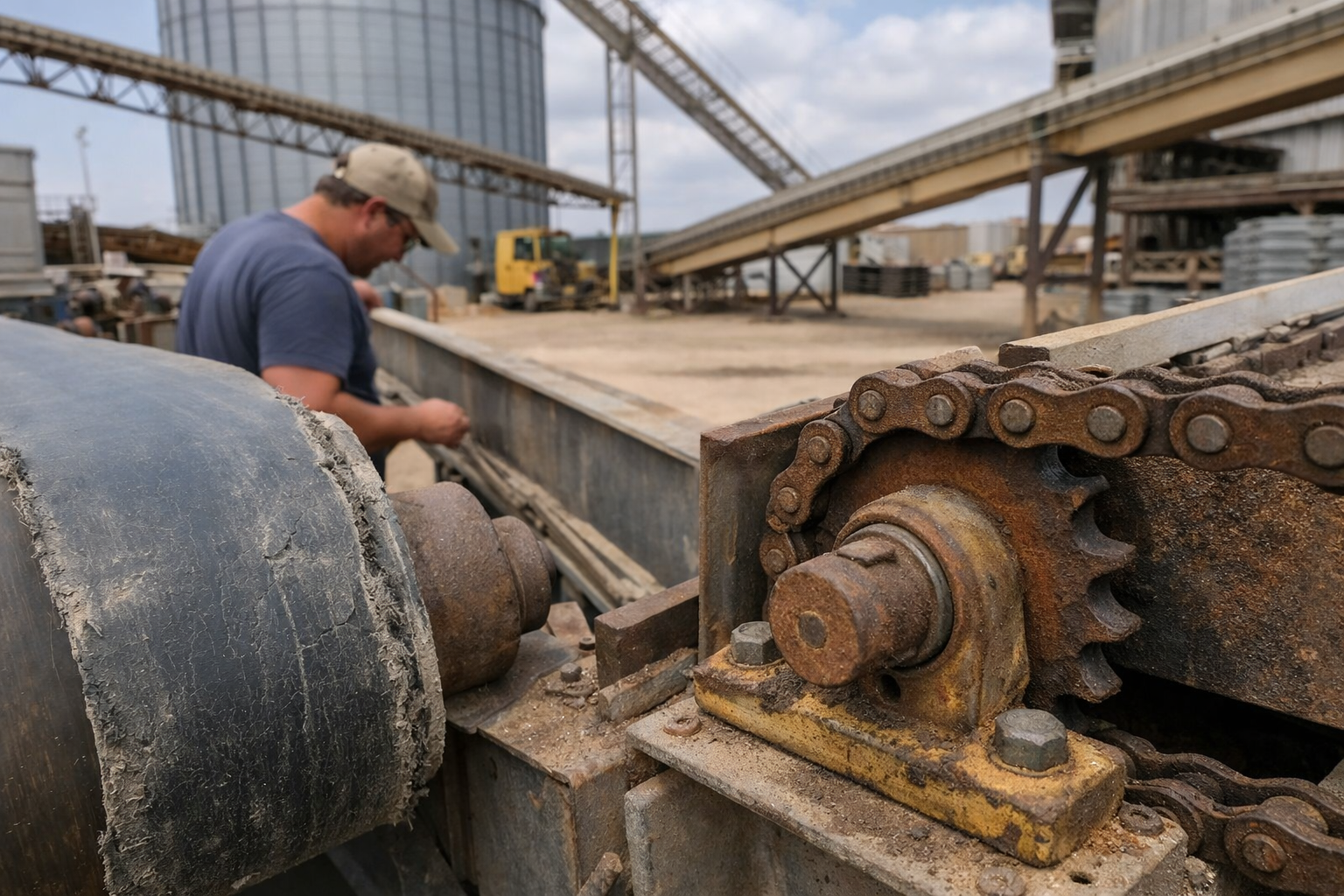
When a conveyor belt starts slipping or fraying, it usually signals more than surface level damage. Belting material breaks down from repeated flexing, exposure to harsh environments, or accumulated debris. A repaired splice might hold temporarily, but if the belt structure has already weakened, a failure later on is far more likely. Chains show similar warning signs. Once links begin to elongate or corrode, the entire power transmission sequence becomes unstable.
Repaired components can also increase friction in unexpected ways. A patched belt may not track evenly, which places additional stress on pulleys and shafts. A repaired chain section may create uneven pitch, which affects load distribution and accelerates wear across the system. These issues highlight why operators often choose replacement over repeated repair attempts. When a part reaches the end of its usable lifespan, new components restore uniform performance and protect the rest of the equipment.
Cost Efficiency: Replacement vs. Repeated Repairs
It might seem economical to repair worn conveyor components, but repeated short term fixes often cost more than installing new parts. The cost difference becomes especially clear when you factor in labor, downtime, and production delays. A belt that fails unexpectedly during a high output shift can bring hours of lost productivity. The expense of emergency maintenance usually far exceeds the cost of a planned conveyor parts replacement.
In West Texas industries where tight schedules and heavy workloads are common, predicting maintenance needs is a major advantage. New industrial belts and chains deliver consistent performance and longer service intervals. This stability helps maintenance teams allocate resources strategically rather than reacting to surprise breakdowns.
Another consideration is energy efficiency. As components wear out, conveyors require more power to operate. Extra energy use raises operating costs month after month. By replacing worn conveyor components before they become inefficient, facilities keep their systems running at optimal output while minimizing friction related energy loss.
Facilities in Lubbock and the surrounding region frequently weigh these long term savings against short term repair expenses. In many cases, investing in new parts stabilizes overall operational costs and helps teams avoid the compounding cycle of constant repair work.
Safety and Risk Reduction in Conveyor Systems
Safety should always guide decisions about when to replace conveyor belts. Once a belt or chain reaches a point where it can no longer support the required load or maintain alignment, the risk of injury rises. Sudden breakage can cause objects to fall, equipment to jam, or maintenance personnel to work in hazardous conditions. Even minor slippages create opportunities for pinch points or unexpected system movements.
Old bearings and misaligned sprockets can lead to overheating, vibration, and unpredictable speed changes. When operating in dusty agricultural settings, food handling environments, or high torque manufacturing lines, excessive friction can also become a fire hazard. Replacing these high risk components strengthens system stability and reduces the potential for dangerous failures.
For businesses committed to equipment downtime prevention, scheduled component replacement offers peace of mind. Instead of waiting for something to go wrong, operators can proactively address wear patterns and prevent cascading failures. This approach is especially important for facilities with complex conveyor systems that feed multiple production areas. A failure in one section can force other lines to slow or stop, which multiplies the impact across the facility.
Reliable power transmission components help maintain consistent speeds and loading rates. When new belts and chains synchronize properly, the system performs with fewer vibration spikes or torque imbalances. That stability leads to safer operations, smoother workflow, and improved handling of materials throughout the facility.
Regional Factors: How West Texas Conditions Affect Conveyor Lifespans
Facilities in Lubbock and West Texas operate in environments that place extra stress on conveyor systems. Dust infiltration, heat, and wide temperature swings accelerate the breakdown of industrial belts and chains. Outdoor agricultural conveyors face abrasive particles, moisture, and constant exposure to UV rays. Manufacturing facilities that handle grains, fibers, or heavy industrial materials also generate airborne particles that settle into moving parts.
These regional challenges make durability a priority. Belts that might last several years in a climate controlled setting may require replacement much sooner in West Texas conditions. Chains exposed to moisture or corrosive material need more frequent inspection. Lubrication intervals shorten, and maintenance teams must stay vigilant for signs of premature wear.
Choosing high quality conveyor parts replacement options that match the regional environment offers a strategic advantage. Materials designed for high dust tolerance or corrosion resistance provide better performance and longer service life. Many Lubbock based industrial equipment supply partners stock components built specifically for tough operating conditions. These upgraded parts often outperform standard equipment and help facilities manage environmental stressors more effectively.
Replacing worn conveyor components before they fail becomes even more important in demanding climates. A proactive approach reduces emergency shutdowns that can be especially challenging in remote or high volume production areas. By aligning replacement schedules with environmental realities, West Texas facilities build stronger, more resilient conveyor systems.
Strategic Timing: How to Know When Replacement is the Better Option
The best time to replace an industrial belt or chain is before it reaches a critical failure point. Operators should begin planning when they observe recurring slippage, visible cracking, elongation, uneven tracking, or increased vibration. Noise changes are often early indicators of internal component wear.
Another sign that replacement is necessary is frequent adjustment. If tension needs resetting more often than usual, the component is likely at the end of its structural integrity. When a part begins to affect the performance of other components, such as causing a pulley to misalign or putting extra strain on a motor, the entire system faces unnecessary risk. Replacing the worn item restores proper load balance and prevents more expensive damage elsewhere.
Maintenance logs also play a valuable role. If repairs have been performed repeatedly within a short time frame, the cost of further work is unlikely to be justified. Teams benefit when they shift from reactive maintenance to a proactive cycle that includes scheduled evaluations and planned conveyor parts replacement.
When a facility upgrades other parts of its conveyor systems, it is often smart to replace older belts, chains, and rollers at the same time. New components work best when the entire power transmission system is in sync. This coordinated upgrade approach reduces uneven wear and ensures that the system operates at peak efficiency.
Conclusion
Replacing worn conveyor components is more than a maintenance task. It is a strategic investment that supports productivity, safety, and long term cost control. Facilities across Lubbock and the greater West Texas region operate in demanding environments, and those conditions make timely replacement especially important. Understanding when to replace conveyor belts, how industrial belts and chains deteriorate, and why repairs sometimes create additional risks helps operators make informed decisions.
A proactive approach to conveyor parts replacement strengthens equipment reliability and reduces the most disruptive form of loss, which is unexpected downtime. When you invest in quality power transmission components and upgrade systems before they fail, you protect your production schedule, your workforce, and your bottom line.
Categorised in: Conveyor Components, Cotton Gin Components, Cotton Mill Components, Mechanical Components
This post was written by BizIQ